
The label INTJ describes a mind built for strategy, foresight, and design.
You think in long arcs. You see how systems interconnect. You notice patterns most people miss — and you instinctively want to make those patterns work better.
At a surface level, INTJ stands for:
-
I – Introvert: Your energy renews inward. You need time alone to think, plan, and integrate.
-
N – Intuitive: You focus on meaning and pattern, not just what’s tangible or immediate.
-
T – Thinking: You make decisions through analysis and systems logic.
-
J – Judging: You prefer clarity, closure, and organized structures in your outer world.
These letters describe a temperament that values efficiency, competence, and long-term vision.
But that’s only the outer layer.
What most people call “INTJ” is a label — a convenient shorthand for something far deeper: the architecture of your cognition.
The Essence of Being an INTJ
At the core of every INTJ is the need to build systems that endure.
You’re wired for sustainability — not just in business or logistics, but in ideas, relationships, and meaning. You want the structures around you to make sense and to last.
This is not about control. It’s about coherence.
An INTJ doesn’t chase chaos; they engineer elegance.
When you observe a process — a business model, a workflow, a relationship dynamic — your mind begins to map it. You instinctively test for failure points, weak links, inefficiencies. You want to understand how something works so you can make it stronger.
This is why INTJs are often drawn to leadership, architecture, science, or strategic design. But even outside of formal systems, the instinct is the same: how can this be improved, simplified, or made sustainable?
Beneath that analytical surface, though, there’s something softer — a sensitivity that rarely shows.
INTJs are like arthropods: a protective exoskeleton shielding a very tender interior.
It takes time to trust. You don’t open easily. But when you do, loyalty runs deep and steady.
Why Most INTJs Never Get Past the Label
You can find thousands of personality profiles online describing what INTJs act like — rational, strategic, private, future-focused.
That information is accurate, but it’s incomplete.
Those four letters don’t explain the internal machinery that makes those behaviors happen.
They don’t show why you think the way you do, or how your inner processes interact under stress, growth, or conflict.
That’s why many INTJs read descriptions and think, “Some of that fits… but it doesn’t explain me.”
You’re right.
The label doesn’t capture your inner experience because it isn’t designed to.
The label tells you what to call the city.
The map shows you how to navigate it.
The Label Isn’t the Map
Imagine standing in the middle of New York City.
The name tells you where you are, but it won’t help you move through it.
You can look for street signs, landmarks, and patterns, but only when you unfold a map do you see the design... how the parts connect, where you’re likely to get lost, where you’ll find the view you’re looking for.
That’s what understanding your INTJ cognitive map does.
It reveals how your mental processes cooperate, compete, and compensate for each other — and how to work with them consciously.
The label helps you identify.
The map helps you navigate.
The INTJ Mind in Action
Strengths:
-
Strategic, visionary, long-range planning.
-
Deep focus and persistence.
-
Pattern recognition and structural insight.
-
Strong self-discipline and self-reliance.
-
The ability to stay calm when others panic.
Challenges:
-
Perfectionism that leads to inaction.
-
Difficulty delegating or trusting others’ competence.
-
Feeling misunderstood or emotionally disconnected.
-
Over-reliance on mental energy and neglect of physical needs.
-
Becoming impatient with inefficiency or small talk.
INTJs are builders of mental architecture.
You create systems that hold up under pressure — whether that’s a business, a worldview, or a morning routine. But the same drive for refinement can also turn inward, leading to self-critique or burnout.
When life feels misaligned, INTJs don’t explode — they withdraw. They retreat into solitude to repair, rebuild, or redesign from scratch.
It’s efficient, but isolating. And it can create a feedback loop where connection feels like interference instead of support.

Mapping the INTJ Mind: The Personality Car Model Map
Your mind is a four-part system — a vehicle made of distinct yet interdependent processes.
This is the Personality Car Model Map, a way to visualize how cognition actually drives your life.
-
Driver – Introverted Intuition (Perspectives)
Your primary mode of perception. You see patterns, trajectories, and meaning. This is the quiet inner radar that lets you future-pace and forecast outcomes. -
Co-Pilot – Extraverted Thinking (Effectiveness)
The engine that implements. It organizes, plans, and executes — the key to turning insight into impact. Developing it creates real-world traction. -
10-Year-Old – Introverted Feeling (Authenticity)
Your internal compass of values and emotion. When balanced, it keeps you honest and human; when reactive, it isolates you. -
3-Year-Old – Extraverted Sensing (Sensation)
Your tether to the physical world. It recharges you through movement, beauty, and presence — but ignored too long, it demands attention through burnout or over-indulgence.
These four seats explain nearly every INTJ strength and struggle: your drive for mastery, your reluctance to delegate, your precision under pressure, and your fatigue when the world won’t cooperate with your logic.
Growth and the Exoskeleton
INTJs grow like arthropods.
They build strong frameworks around themselves — mental, emotional, practical.
Then, when those frameworks become too restrictive, they moult.
Each “moult” can look dramatic from the outside — a new job, a new philosophy, a total system overhaul. But inside, the process is deliberate and methodical. You’re not reinventing yourself — you’re restructuring for the next stage of growth.
The danger is when the new shell never hardens, or when you stay trapped in an old one too long.
INTJs can suffocate under systems that once kept them safe — careers, relationships, routines that no longer fit.
Growth for an INTJ means learning when to let the next system emerge.
It’s not chaos. It’s evolution.
“Creating sustainable models is the 'crack cocaine' of INTJs.”
— Antonia Dodge
Real-World Terrain
Work & Mastery
You thrive when you can build, refine, and execute on meaningful ideas. You want autonomy and measurable results — not endless meetings or emotional politics.
Your challenge: translating big ideas into consistent daily action.
Your growth path: engage your Co-Pilot (Effectiveness) to implement what your intuition imagines.
Relationships & Trust
You open slowly, but once you commit, you’re deeply loyal. You prefer relationships with mutual respect and clear purpose.
Your challenge: learning to share the process, not just the conclusion.
Your growth path: use Authenticity (Introverted Feeling) to connect emotionally without compromising logic.
Parenting & Leadership
You teach by example — showing rather than telling. You raise independence, critical thinking, and resilience.
Your challenge: remembering that others learn through emotion, not efficiency.
Your growth path: balance high standards with empathy and presence.
Habits & Health
You live in your head. The body can feel like a distraction. But ignoring the physical world drains your energy and intuition alike.
Your growth path: nurture your Sensation process — engage your senses, rest your mind, and ground yourself in movement and rhythm.
Seeing the Pattern Beneath the Pain
For INTJs, pain often comes from seeing too much — noticing every inefficiency, every possible failure, every unfulfilled potential. You carry awareness like an extra sense, and it’s exhausting.
But that awareness is also your gift. It allows you to design better systems, relationships, and futures — if you can stay grounded in implementation and connection.
Real growth isn’t about more data. It’s about testing the system — using your map to create change in motion.
From Label → Map → Mastery
Your type isn’t your identity.
It’s a coordinate — a starting point for exploration.
The map reveals the system running underneath.
And mastery begins when you start using that system consciously — shaping your environment, habits, and relationships to match how your mind truly operates.
For INTJs, mastery looks like this:
-
Strategy balanced with empathy.
-
Vision supported by implementation.
-
Independence anchored in connection.
That’s the evolution: from label, to map, to mastery.
The label is a coordinate.
The map is a guide.
Mastery is movement.
Your Map Starts Here: The INTJ Owner’s Manual
If the label tells you what kind of mind you have,
the Owner’s Manual shows you how to operate it.
Inside, you’ll find:
-
A detailed map of the INTJ cognitive system.
-
Guidance to build sustainable effectiveness and avoid burnout.
-
Real tools to align mind, body, and purpose.
It’s not a personality description — it’s a navigation tool.
A way to chart your growth and drive your own transformation.
Get Your INTJ Owner’s Manual →
Related Maps to Explore
INTx Unleashed — The Map of Connection & Impact
Bridge private insight with public influence. Learn to connect, communicate, and lead without posturing.
Intuitive Awakening — The Map of Inner Guidance
Rediscover trust in your intuitive process — balancing data with depth.
Personality Profiler Training™ — The Map of Seeing Others
Decode the minds around you. Build collaboration through understanding, not compromise.
Become the Main Character Of Your Life.
Discover how your personality type reveals the path forward — and how to finally take the lead in your life.
INTJ Owners Manual Course

Why We Started This Work
We didn’t start Personality Hacker because life was easy.
We built it because our lives had fallen apart.
“We rebuilt from scratch after everything had fallen apart.”
When we met both of our lives had collapsed — just in different ways.
Joel was separated from his family, isolated and grieving the sudden disconnection from his children. Antonia had been cast out of a belief system that once shaped her identity. Both of us were told, in different ways: you don’t belong anymore.
“We followed the rules. We still got broken.”
We’d done everything “right.” We followed the playbook given to us. We showed up for others. We tried to do the right thing and fit in with the expectations.
But despite that, we found ourselves exiled, uncertain, and questioning everything.
We faced pain and paralyzing weight of uncertainty.
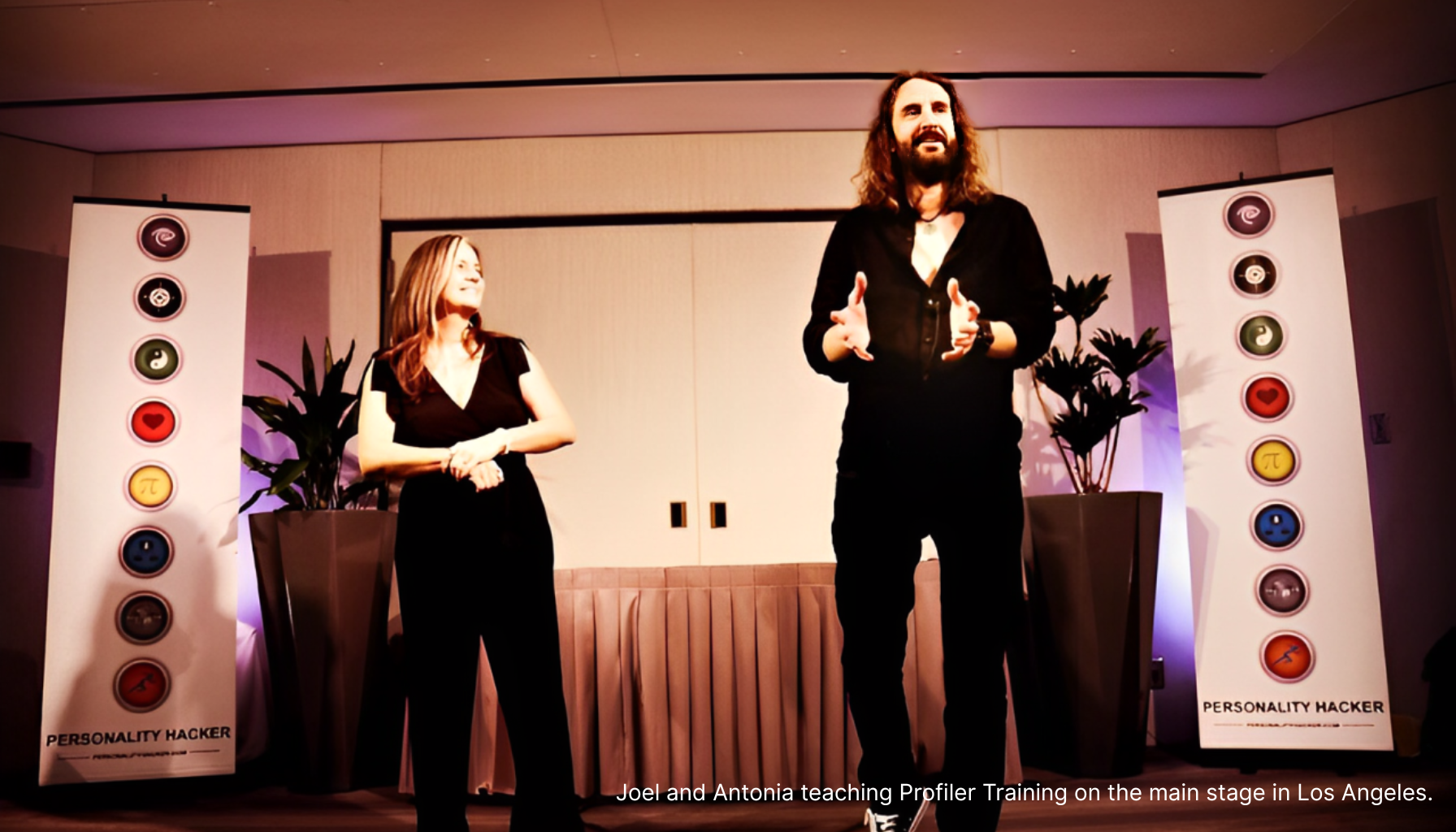
“Then we found the map of personality types, Carl Jung’s cognitive functions & shadow work.”
When we discovered Carl Jung’s deeper personality system — the cognitive functions of personality, the ancient archetypes, the deep inner shadow — everything clicked.
For the first time, we had language for what we were experiencing. We understood why we did what we did. We stopped pathologizing ourselves… and started seeing our wiring with clarity and compassion.
We started the process of living life differently… in ways that made sense and aligned with our natural mental wiring and personalities.
“We stopped searching for certainty. We started embracing growth.”
It was from a challenging place that Personality Hacker was born. We wanted to help people who were struggling like we had been. So we started to record podcasts. We started to create training programs. We began coaching real clients through some of the toughest life moments.
And we want help you too. Let’s work together to decode your inner personality wiring, break free from old limiting beliefs, and design a life that actually fits You.
“It’s your life, design it for your personality.”
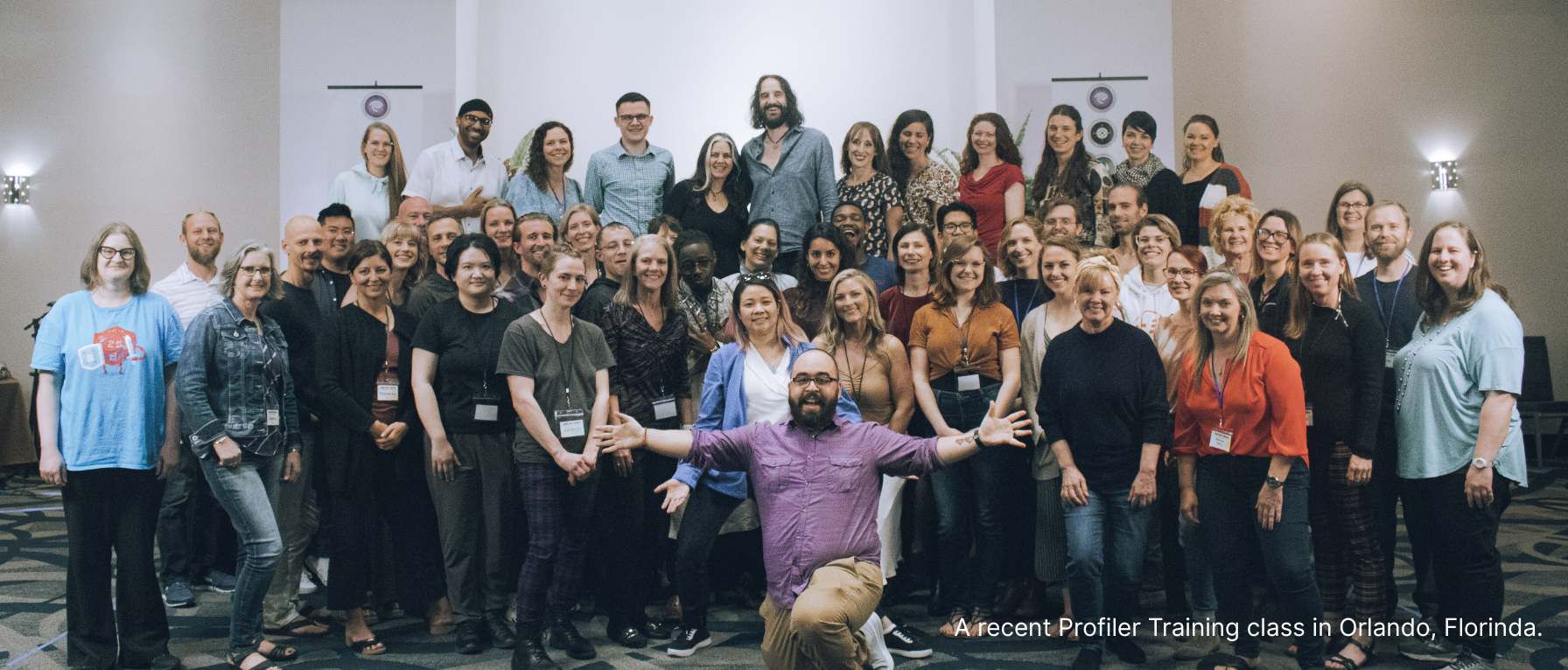
Start Your Journey with Joel & Antonia
You might be here because...
- You know there’s more to you than the labels you’ve been given
- You’ve tried growing — but most tools didn’t go deep enough
- You want better relationships, clearer direction, or more meaning
- Or… you’re just plain curious about how the human mind works
Whatever brought you here, we’re glad you came. Let’s choose a path together:
I’m New to Personality Types
“I don’t know my type yet. I’m curious but overwhelmed.”
We’ll guide you step-by-step. Start with our free personality test and a short video that explains the fundamentals.
I Know My Type — I Want to Grow
“I know my MBTI type, but I don’t know how to use it for personal growth.”
Check out your Personality Owner’s Manual — a self-paced course made specifically for your type.
I Want to Help Others Using Type
“I’m a coach, therapist, or just fascinated by people — I want to use this in my work.”
PersonalityProfiler Training is our flagship program that teaches you to understand people on a deep level.
Explore the World of Personality with Us
Get Unstuck - Stop Self-Rejection - Find Your True Purpose
Tools For Helping Others
The Personality Hacker Approach Is Targeted To Actually Improve Your Daily Life & Deliver Results
There’s a lot of personality type content out there — memes, stereotypes, quick quizzes…
But we go deeper.
We integrate practical psychology, neuroscience, shadow work, and systems thinking.
We teach Jungian cognitive functions, not just four-letter types.
Our work isn’t about labeling you.It’s about giving you tools to understand, grow, and lead — from the inside out.
Backed by Science, Licensed Clinical Therapists, Depth Psychology & Real-World Practice
At Personality Hacker, we don’t just talk about personality — we’ve collaborated directly with leading researchers, licensed clinical therapists, coaches, and Jungian theorists to deepen and validate our work.

Dr. Dario Nardi
Neuroscientist • Author • Former UCLA Professor
Dr. Nardi has used EEG brain imaging to study personality in real-time. His work shows that the brain patterns behind personality type can be measured — confirming what Jung hypothesized a century ago.
“The once ‘soft science’ of personality now has hard data behind it.”
We’ve partnered with Dr. Nardi to bring this research into our trainings, including live EEG demonstrations at our events and an ongoing course series called Personality Tools of the Future.

Dr. John Beebe
Jungian Analyst • Author • Pioneer of the 8-Function Model
Dr. Beebe’s work has shaped our understanding of the shadow functions and archetypal dynamics inside type. He developed the 8-function model that gives personality type psychological depth, nuance, and emotional reality.
“It’s not just about your ‘best self’ — it’s about integrating the parts of you you’ve hidden.”
Our ongoing collaboration with Dr. Beebe has deeply influenced our Personality Profiler Training method, Personality Card Decks, and archetypal shadow work.
Trusted Around the World
A Global Network Of Students - Alumni - And Creators
Since 2010, we’ve taught over 12,000+ students across six continents in the art of personality self-understanding, personality profiling, and Jungian coaching.
Along the way, Joel & Antonia have spoken at leading institutions like the University of Southern California, University of Pittsburgh, and American University. We've also been featured at major conferences including the Association for Psychological Type International (APTi), the British Association of Psychological Type (BAPT), and Australia’s APT Conference, and Mindvalley.
Our corporate consulting has brought personality insights to companies like Oracle, Zappos, Amazon, CNN, American Express, and Abbott, helping teams apply personality dynamics to leadership, collaboration, and communication.
From classrooms to companies to deep personal growth, one thing remains true:
Understanding personality type changes lives.
Hosting the #1 Personality Podcast Since 2014 Weekly Insights from Joel & Antonia
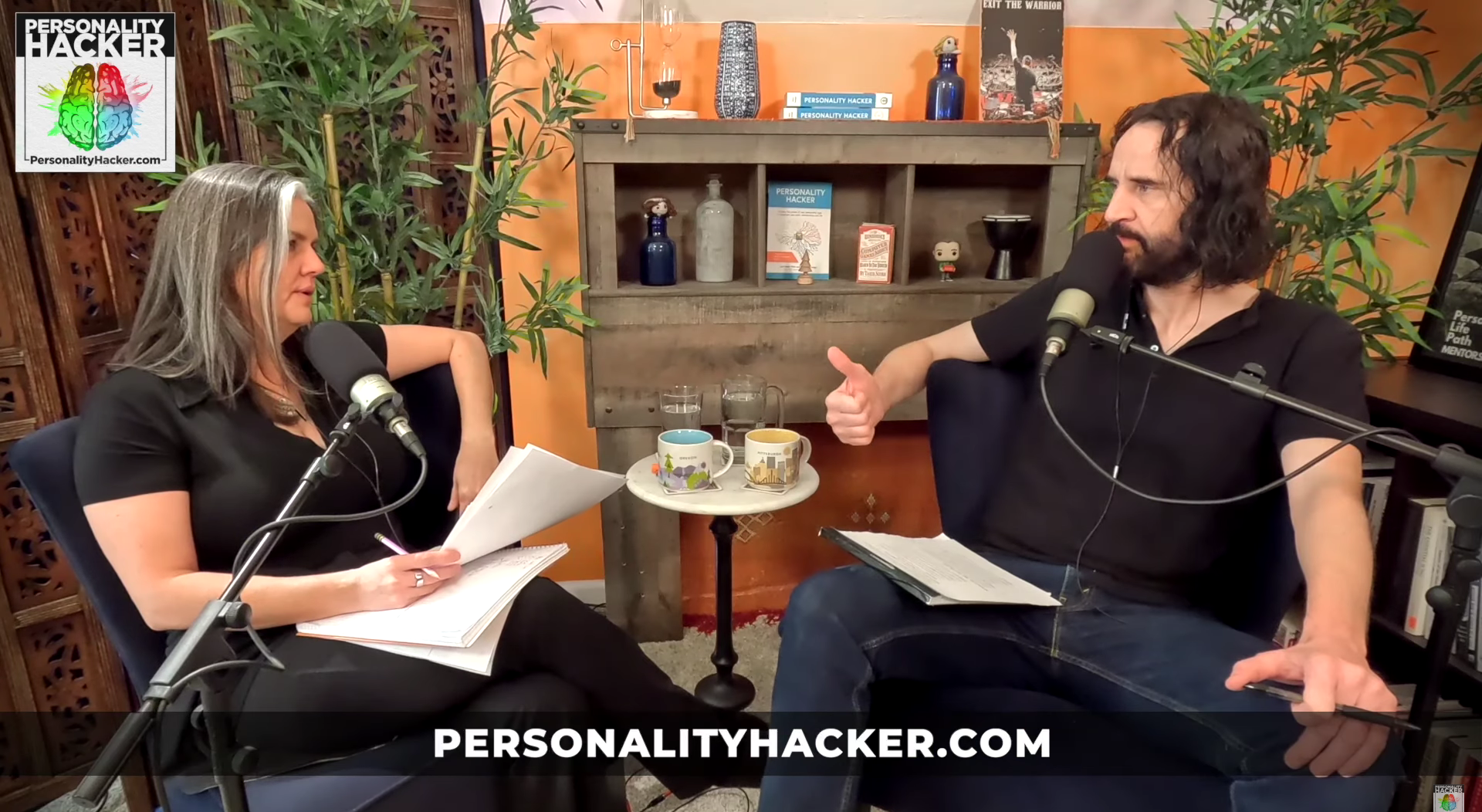
We’ve been showing up every week for over a decade, hosting the #1 personality podcast since 2014 — with over 15+ million downloads and listeners in over 100+ countries.
Every episode is a dialectic conversation about personal growth, personality type theory, interpersonal relationships, deep Jungian shadow work, and how to actually apply personality knowledge to real life.
If you’re new to Personality Hacker, this is one of the best places to begin.

Joel & Antonia’s Book — Personality Hacker
We literally wrote the book on this.
Our book, Personality Hacker, has helped thousands of readers understand how their mind is wired — and how to grow using their unique cognitive strengths.
Published by Ulysses Press, it’s a practical, approachable guide that brings Jungian cognitive functions into everyday life. Whether you're new to type or deep into your journey, this book is your blueprint for personal transformation.

Become the Main Character of Your Own Life
Listen to this FREE audio to learn a simple 3-level framework to reclaim authorship over your own STORY